Philadelphia Eagles’ Alleged Snub of Donald Trump Sparks Anger, Debate

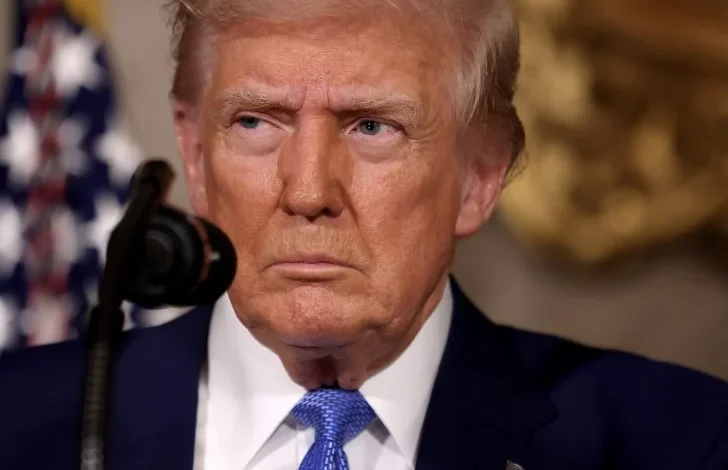
In American sports, symbolism often matters as much as scorelines. Jerseys become flags. Stadiums morph into civic plazas. And when athletes or franchises brush up against politics, the reverberations can echo far beyond the final whistle. Few recent controversies capture this collision as vividly as Philadelphia Eagles’ Alleged Snub of Donald Trump Sparks Anger, Debate—a phrase that has ricocheted across cable news, social media feeds, and barroom conversations alike.
At its core, the dispute is less about football and more about identity, allegiance, and the unresolved tensions that still animate American public life.
A Tradition Laden With Meaning
For decades, championship teams have been invited to the White House. The ritual is ceremonial, almost quaint. Players don suits. Coaches crack jokes. The president shakes hands and praises teamwork. Yet the visit has never been politically neutral. It is a tacit endorsement of national unity, even when unity itself feels aspirational.
When a team declines—or is perceived to decline—the invitation, the gesture is read as a statement. Silence becomes rhetoric. Absence speaks loudly.
That is why the phrase Philadelphia Eagles’ Alleged Snub of Donald Trump Sparks Anger, Debate gained traction so quickly. To supporters of the former president, it suggested disrespect for the office. To critics, it hinted at moral dissent. To many others, it raised a simpler question: should sports teams be expected to play along with political theater at all?
How the Controversy Took Shape
The controversy did not erupt in a vacuum. It emerged from a familiar pattern in recent American life: fragmented facts, accelerated outrage, and instantaneous interpretation. Reports circulated that members of the Eagles were unwilling to participate in a White House visit during Donald Trump’s presidency. Some accounts suggested internal disagreement. Others pointed to broader player activism.
The word “snub” proved combustible. It implies intent. It presumes a slight. Yet intent is often murkier than headlines suggest.
Still, perception often outruns nuance. Within hours, talk radio lit up. Hashtags trended. Pundits staked positions. The narrative hardened into a culture-war flashpoint: Philadelphia Eagles’ Alleged Snub of Donald Trump Sparks Anger, Debate became shorthand for something much larger than a missed photo op.
Fans Caught in the Crossfire
Philadelphia is a city with a famously passionate fan base. Loyalty runs deep. Booing is an art form. So when the Eagles were drawn into a national political dispute, fans found themselves unexpectedly conscripted.
Some supporters felt pride. They saw independence. A refusal to be co-opted. Others felt frustration, even betrayal. They wanted football to remain football—untangled from Washington’s perpetual sparring.
Season-ticket holders argued on message boards. Family group chats went silent. A Super Bowl victory, once a unifying triumph, suddenly felt repurposed for ideological skirmishes.
This emotional fragmentation underscores why Philadelphia Eagles’ Alleged Snub of Donald Trump Sparks Anger, Debate resonated so widely. It wasn’t just about Trump. It was about whether shared civic rituals can survive in a polarized age.
The Trump Factor
Donald Trump has long understood the performative power of conflict. His political style thrives on confrontation and loyalty tests. In that context, a perceived rejection by a championship team carried symbolic weight.
Supporters interpreted the episode as another example of elite institutions distancing themselves from a president who challenged norms. Critics saw it as predictable fallout from rhetoric that had already alienated athletes across leagues.
Trump’s response—public, sharp, and characteristically unfiltered—ensured the issue stayed in the spotlight. The feedback loop intensified. Every statement fueled counter-statements. The controversy metastasized.
Thus, Philadelphia Eagles’ Alleged Snub of Donald Trump Sparks Anger, Debate became not merely a headline but a recurring talking point, invoked whenever sports and politics collided.
Athletes as Political Actors
In earlier eras, athletes were often counseled to “stick to sports.” That expectation has eroded. Modern players command platforms once reserved for politicians and media moguls. Social issues, racial justice, and civic responsibility have become part of locker-room conversations.
Against this backdrop, any team’s engagement—or disengagement—with political institutions is scrutinized. The Eagles were not unique. Across leagues, players have knelt, spoken out, boycotted, and organized.
Yet football, with its martial imagery and national following, occupies a special place in American culture. Actions by NFL teams carry disproportionate symbolic heft. This magnification helps explain why Philadelphia Eagles’ Alleged Snub of Donald Trump Sparks Anger, Debate eclipsed similar controversies in other sports.
Media Amplification and Narrative Drift
The modern media ecosystem thrives on velocity. Nuance is often collateral damage. Initial reports, sometimes incomplete, are rapidly reframed as definitive judgments. Opinion blurs into fact.
In this case, the word “alleged” frequently fell away. What remained was certainty. Outrage hardened into orthodoxy.
Television panels debated patriotism. Columnists invoked constitutional principles. Social media distilled complex dynamics into memes. Each iteration nudged the story further from its factual nucleus.
The result was a narrative drift where Philadelphia Eagles’ Alleged Snub of Donald Trump Sparks Anger, Debate became a vessel for preexisting grievances, rather than a discrete event with specific circumstances.
The Question of Obligation
Do championship teams owe a visit to the White House? Legally, no. Culturally, perhaps. Historically, often.
The ambiguity fuels disagreement. For some, the invitation is a nonpartisan honor tied to the presidency, not the person. Declining it is seen as an affront to national tradition. For others, participation feels like implicit endorsement, especially when political rhetoric clashes with personal values.
This tension has no easy resolution. It reflects a broader dilemma: how to maintain shared rituals in a society increasingly divided over what those rituals represent.
Thus, Philadelphia Eagles’ Alleged Snub of Donald Trump Sparks Anger, Debate functions as a case study in civic uncertainty.
Philadelphia’s Civic Identity
Philadelphia occupies a unique symbolic space. Birthplace of American democracy. City of grit and dissent. The Eagles, in many ways, mirror that ethos. Underdogs. Defiant. Unapologetic.
Some observers argue that the controversy aligns with the city’s historical character—a skepticism toward centralized authority, a comfort with confrontation. Others reject this romanticization, insisting that a football franchise should not be burdened with representing political philosophy.
Still, the city’s identity shapes interpretation. In Philadelphia, defiance can be read as authenticity. Elsewhere, it may be seen as provocation.
That regional lens further complicated reactions to Philadelphia Eagles’ Alleged Snub of Donald Trump Sparks Anger, Debate.
Political Polarization on Display
Perhaps the most striking aspect of the episode is how quickly it mapped onto existing political divides. Responses often revealed more about the commentator than the event itself.
Conservatives framed the issue around respect and patriotism. Progressives emphasized conscience and autonomy. Moderates lamented the erosion of common ground.
Few minds were changed. Many positions were reinforced.
In that sense, Philadelphia Eagles’ Alleged Snub of Donald Trump Sparks Anger, Debate was less a debate than a mirror, reflecting entrenched perspectives back at their holders.
Long-Term Implications for Sports
What does this mean for the future? It suggests that sports organizations will continue to navigate a treacherous landscape. Silence can be interpreted as complicity. Speech can provoke backlash. Participation in civic rituals is no longer neutral.
Teams may opt for cautious ambiguity. Or they may embrace transparency, accepting controversy as the cost of authenticity.
Either way, the era of uncomplicated celebration appears to be fading. Championships will still be won. Parades will still roll. But the surrounding narratives will remain contested.
The aftershocks of Philadelphia Eagles’ Alleged Snub of Donald Trump Sparks Anger, Debate hint at a future where every public gesture is parsed for political meaning.
Beyond the Eagles
While the Eagles sit at the center of this storm, the implications extend far beyond Philadelphia. Other teams have watched closely. So have leagues, sponsors, and civic institutions.
The question lingers: can there be national symbols that transcend politics, or has polarization rendered that hope obsolete?
If a White House visit—once a relatively benign tradition—can ignite such fervor, what rituals remain safe?