
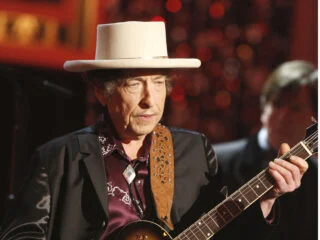
Bob Dylan: Everything You Need to Know About the Man Who Inspired ‘A Complete Unkown’
Few figures in modern music possess a mystique as enduring and enigmatic as Bob Dylan. His career spans decades, genres, and cultural revolutions, yet he remains simultaneously ubiquitous and inscrutable. From folk ballads in Greenwich Village to electric anthems that reshaped rock, Dylan’s influence is both seismic and subtle, leaving indelible marks on generations of musicians, writers, and cultural commentators. For those intrigued by the origins of certain creative inspirations, Bob Dylan: Everything You Need to Know About the Man Who Inspired ‘A Complete Unkown’ provides a window into the life, work, and mythos of an artist whose impact transcends simple categorization.
Born Robert Allen Zimmerman in Duluth, Minnesota, Dylan’s early life laid the foundation for a career defined by transformation and curiosity. He grew up immersed in a mélange of musical traditions—from the blues-inflected strains of African-American musicians to the country-infused storytelling of his Midwest environment. These early exposures shaped a sensibility that was simultaneously reflective and iconoclastic.
His adolescence was marked by a voracious appetite for literature, poetry, and song. Dylan’s early encounters with the works of Woody Guthrie, Hank Williams, and the Beat poets provided the scaffolding for his emergent style. Every lyric, every phrase, seemed informed by a deep engagement with narrative, rhythm, and the mutable qualities of language. In this context, Bob Dylan: Everything You Need to Know About the Man Who Inspired ‘A Complete Unkown’ begins with the recognition that his formative years were as instrumental to his legacy as his later fame.
Dylan’s migration to New York City in the early 1960s was catalytic. Greenwich Village, a nexus of artistic experimentation, offered fertile ground for the young songwriter’s restless energy. Folk clubs and smoky cafes became laboratories for his craft, spaces where he honed his voice and tested the resonance of his emerging persona.
Performing alongside contemporaries such as Joan Baez, Pete Seeger, and Phil Ochs, Dylan navigated both collaboration and rivalry. It was in these intimate venues that he began to cultivate the enigmatic stage presence that would define his public identity: elusive, unpredictable, and magnetic. Observers often remarked on his ability to simultaneously inhabit the role of participant and observer, a duality that informed his songwriting and performance.
Dylan’s ascent coincided with a period of intense social and political upheaval. The civil rights movement, anti-war activism, and burgeoning youth culture provided a backdrop against which his music acquired extraordinary significance. Songs such as “Blowin’ in the Wind” and “The Times They Are A-Changin’” were not merely popular—they became rallying cries, anthems of conscience and possibility.
Yet Dylan’s relationship with politics was nuanced. While his lyrics often engaged with societal concerns, he resisted straightforward categorization as a political spokesperson. This complexity is central to understanding why Bob Dylan: Everything You Need to Know About the Man Who Inspired ‘A Complete Unkown’ emphasizes his enigmatic engagement with social commentary, revealing a musician whose art was never fully subservient to ideology, yet profoundly reflective of its moment.
One of Dylan’s defining characteristics is his relentless reinvention. From acoustic folk to electric rock, from country to gospel, his career is a chronicle of audacious shifts. The infamous 1965 Newport Folk Festival performance, where he introduced an electric guitar to a predominantly acoustic audience, exemplifies his willingness to challenge expectation and redefine genre boundaries.
Each phase of Dylan’s musical exploration reflects a deep interrogation of form, style, and authenticity. He approached music as a living organism, capable of evolution and surprise. Bob Dylan: Everything You Need to Know About the Man Who Inspired ‘A Complete Unkown’ underscores the artist’s protean nature, demonstrating how his audacious shifts in sound and persona expanded the possibilities of popular music.
Dylan’s lyrics have long been subjects of critical scrutiny, often analyzed with the rigor typically reserved for literary texts. His command of metaphor, allegory, and narrative complexity has earned him recognition not merely as a musician but as a literary craftsman. The awarding of the Nobel Prize in Literature in 2016 further cemented this perception, acknowledging the depth and cultural significance of his body of work.
His songs often operate on multiple planes: personal, political, and mythic. Lines can be read as intimate confessions, social critiques, or abstract meditations. This lyrical multiplicity ensures that Bob Dylan: Everything You Need to Know About the Man Who Inspired ‘A Complete Unkown’ captures a figure whose influence extends well beyond musical innovation, permeating poetry, literature, and cultural analysis alike.
Dylan’s public persona is a carefully constructed enigma. He oscillates between accessibility and obfuscation, often deflecting direct questions and maintaining a deliberate opacity in interviews. This cultivated mystique has allowed his audience to project multiple interpretations onto his work, rendering each listener’s experience both personal and idiosyncratic.
This mystique is a central reason why the subject of Bob Dylan: Everything You Need to Know About the Man Who Inspired ‘A Complete Unkown’ continues to captivate. The “unknown” element is not a deficit, but a deliberate facet of his artistic strategy, emphasizing the interplay between presence and elusiveness that has characterized his career.
Few artists can claim the breadth of influence that Dylan wields. Musicians across genres—rock, folk, punk, country, and hip-hop—cite him as a foundational inspiration. Songwriters reference his intricate lyricism; performers emulate his stagecraft and improvisational spirit. The resonance of Dylan’s work is both direct and diffuse, shaping the trajectory of contemporary music in ways often unacknowledged yet deeply pervasive.
This cross-generational impact situates Bob Dylan: Everything You Need to Know About the Man Who Inspired ‘A Complete Unkown’ not only as a biographical account but as a lens through which to understand cultural evolution. His innovations catalyzed shifts in songwriting, performance, and the broader discourse on artistry and authenticity.
Dylan’s personal life, much like his public persona, has been carefully managed. Marriages, family relationships, and private struggles are recounted with discretion, rarely dominating media narratives except when they intersect with his creative output. This privacy adds to the aura of mystery that surrounds him, reinforcing the “complete unknown” motif in both public perception and artistic interpretation.
Even as his work invites intense scrutiny, Dylan retains a boundary between performance and personal existence. Bob Dylan: Everything You Need to Know About the Man Who Inspired ‘A Complete Unkown’ acknowledges this tension, situating the artist’s life within a framework of deliberate opacity that enhances the symbolic and interpretive richness of his oeuvre.
Dylan’s career cannot be fully understood without situating it within the broader cultural and historical landscape. He emerged during a period of seismic social change, with civil rights, anti-war sentiment, and countercultural movements shaping public consciousness. His work both reflected and influenced these currents, rendering him simultaneously a product of his era and a transformative agent within it.
The ongoing relevance of his music, particularly tracks that continue to inspire reinterpretation and homage, attests to his enduring engagement with societal undercurrents. The question posed in Bob Dylan: Everything You Need to Know About the Man Who Inspired ‘A Complete Unkown’ is as much about cultural literacy as it is about biography, inviting audiences to trace the interconnections between music, history, and collective memory.
Critical response to Dylan’s work has often been polarizing, a testament to the provocative nature of his artistry. Yet over time, a consensus emerges recognizing the profound depth, innovation, and enduring significance of his contributions. Critics laud his lyrical dexterity, his capacity for reinvention, and his uncanny ability to capture the zeitgeist while simultaneously transcending it.
This enduring critical engagement ensures that Bob Dylan: Everything You Need to Know About the Man Who Inspired ‘A Complete Unkown’ is not merely a snapshot of a life but an ongoing dialogue, reflecting the evolving interpretations of his work across decades.
The phrase “complete unknown” encapsulates Dylan’s paradoxical allure. He is widely recognized, yet his inner life remains inscrutable. His music is both familiar and endlessly enigmatic, offering listeners a sense of intimacy while simultaneously eluding full comprehension.
This duality is central to understanding why Bob Dylan: Everything You Need to Know About the Man Who Inspired ‘A Complete Unkown’ continues to resonate. It highlights the interplay between visibility and mystery, presence and absence, narrative and interpretation—a dynamic that defines both Dylan’s life and his legacy.