
Debt Consolidation in 2026: A Smarter Way to Pay Off Debt Faster
For millions of Americans, managing multiple debts can feel overwhelming. Credit cards, personal loans, and other high-interest balances can quickly pile up, making it difficult to keep track of payments and even harder to make real progress toward becoming debt-free. That’s where debt consolidation can become a powerful financial strategy.
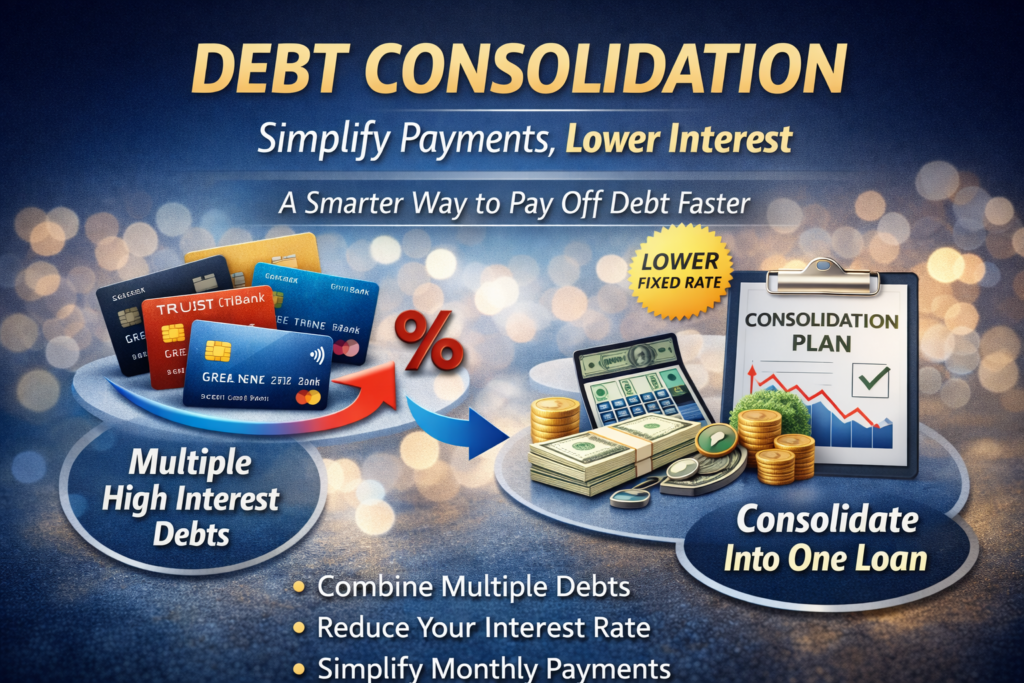
Debt consolidation simply means combining multiple debts into a single loan or payment, ideally with a lower interest rate. Instead of juggling several monthly payments with different due dates and interest rates, borrowers can streamline everything into one manageable payment.
One of the most common forms of debt consolidation is using a personal loan to pay off high-interest credit card balances. Credit cards often carry interest rates above 20%, which can make it extremely difficult to reduce the principal balance. By consolidating those balances into a personal loan with a lower fixed rate, borrowers can potentially reduce their monthly payment and pay off their debt faster.
For example, imagine someone with three credit cards totaling $15,000 in debt with interest rates between 22% and 28%. Even if they make regular payments, a large portion of each payment goes toward interest rather than reducing the balance. A debt consolidation loan with a lower interest rate could significantly reduce the amount paid in interest over time and create a clear payoff timeline.
Another advantage of debt consolidation is simplicity. Managing multiple debts increases the risk of missed payments, which can damage your credit score. Consolidating your debts into a single payment makes it easier to stay organized and maintain consistent payment history.
Many borrowers are also surprised to learn that debt consolidation can sometimes improve their credit profile. When high credit card balances are paid off through consolidation, it can lower credit utilization—the percentage of available credit you’re using. Lower utilization is one of the key factors that can positively impact credit scores over time.
However, not every consolidation option is the same. Before applying for a debt consolidation loan, it’s important to review a few key factors
Interest Rate (APR)
The primary goal of consolidation is reducing the overall cost of debt. Compare offers carefully to find the lowest possible rate.
Loan Term
Longer repayment periods may lower monthly payments but can increase total interest paid. Finding the right balance is important.
Fees
Some lenders charge origination fees or balance transfer fees. Always factor these into the true cost of the loan.
Another popular consolidation method involves balance transfer credit cards. These cards often offer promotional 0% interest periods for 12 to 21 months. During that time, borrowers can focus entirely on paying down the principal without accumulating additional interest.
Debt consolidation works best when paired with a long-term financial plan. Avoid continuing to accumulate new high-interest debt after consolidating existing balances. Instead, use consolidation as a fresh start toward healthier financial habits.
The good news is that today’s online lenders make it easier than ever to compare consolidation options. Many platforms allow you to check potential loan offers in minutes without affecting your credit score, helping you find competitive rates tailored to your financial situation.
If you’re feeling overwhelmed by multiple payments or high interest charges, exploring debt consolidation options could be the first step toward regaining financial control and moving closer to a debt-free future.